Some Thoughts

Showing posts with label joint family. Show all posts

Monday, July 18, 2011

Karkkidaka vavu bali


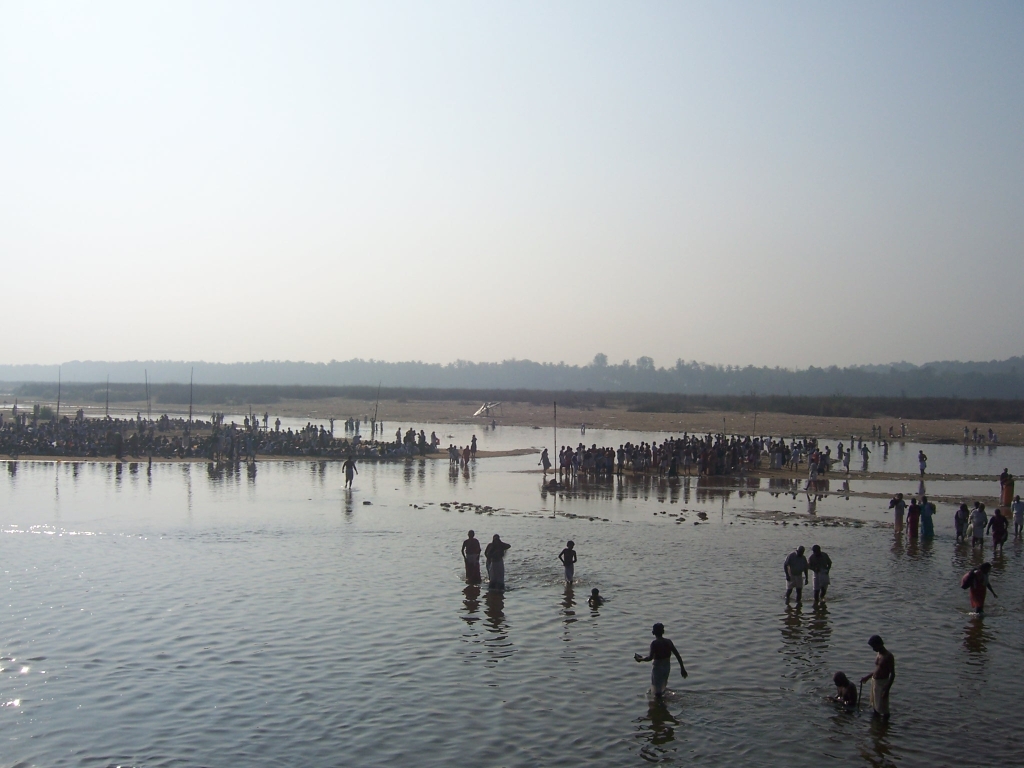
Bali tharpanam at Thirunavaya.

Every Malayali Hindu family observe the Karkkidaka Vavu. This year, 2011 it falls on the 30th of July. Pithru tharpanam is the most noble ritual all Hindus must do. It is the remembrance of one’s ancestors. One should observe the bali to the past 7 generations of his family.

Yearly Pithru bali for each of the deceased family members is observed without fail, by their children, in our family. The rituals have slight changes in different regions, but we follow what our ancestors did.

Karkkidaka vavu falls on the New moon day of Karkkidakam, the first Amavasi of Dakshinayanam. Hindus believe that paying respect to Pithru devatas during this time is a noble ritual.

We observe a semi-fasting on the previous day of Pithru tharpanam. We observe “Orikkal”, which means having “annam” only once a day. For the people of Kerala, their “Annam” is rice. So we take a meal only once that day. We take food only after the bali tharpanam is over the next day.

Throughout Kerala, the river sides will be crowded with people. The rituals start and end with a dip in the river. Pithru tharpanam is done only wearing wet clothes. The dip in the river is to observe ‘shudham’, no one should touch each other after the bath, till the ‘bali’ is over. The rituals are done with the help of a Brahmin.

In the evening “ada” a sweet rice preparation is made on plantain leaves and offered to God. Though I don’t know the significance of it, we still follow the ritual of making ‘ada’ compulsorily. Idli and vada and ada as prasadam is dinner menu after the karkkidaka bali tharpanam.

Eating certain foods, or not eating certain foods on auspicious days is a custom in our family, still followed by many of the elder generation. We hope the younger generation watch and follow the family heritage of religious rituals. Even though some feel they are superstitions, we elders have faith in them and we are sure they too adopt the values of life taught through the rituals if not now, but at some time in their life.

Friday, July 15, 2011

Pooja room

There was no pooja room in the kizhakkedathu tharavad. A big Nilavilakku was kept in front of the door that opened to Nilavara where rice was stored. There was a long verandah starting from the thalam, which extended up to the next section of the house where the kitchen was. There were a few pictures of God above the Nilavara door. It was too high, or I was too small, that I can’t remember the faces of Gods in those photos. But what I remember clearly is the hand marks on the Nilavara door. Ammoomma’s hands dipped in wet rice flour and stamped on the door would last till the next year when the door is cleaned to put the marks again. We children too would stamp our hand marks which were seen at the foot of the door.

A bunch of new paddy sheaves [kathir katta] fresh from the field hung on top of the door. It was fixed there with cowdung. I think it is the day of Illam Nira, the Birthday of the rice grain celebrated. One whole and healthy grain is selected, bathed and adorned like a girl. It needed much expertise to bathe, put kajal and bindi on the small grain. After the make up, a thread from a new cloth is bound on it like a clothing. Then the women will say “Illam nira, vallam nira “ and put the grain into the Nilavara praying that Nilavara is always filled and we have food for the whole year.

A sadya would be prepared on that day. It is Makam nakshatram and the Birthday of “Nellu” [Rice] Kerala’s food grain. Whatever be the beliefs behind these rituals, the members of the family have always progressed and live in prosperity.

As one of the ladies light the evening lamp, [Nilavilakku], all children would be ready sitting in a line for Naamajapam.

Rama Rama Rama Rama Rama Rama Pahimam

Rama Padam Cherene Mukunda Nama Pahimam

This was recited at the top of our voice repeatedly for a long time. Gopala chettan, our Karanavar sitting at the far end Poomukham should hear our sound. Otherwise he would appear at the door. He need not have to say anything, but our sound would rise automatically on seeing him.

Elder ladies, knew a lot of prayers, and they would be reciting in a lower voice. As years passed, we children too learned a series of prayers starting from Ganesh stuti. Every Hindu God was remembered on evenings with short prayers . Though as children we didn’t know why we did that, and what was meant in those mantras, that became a way of life for us. Even after 50 or more years I follow the tradition of chanting those set of prayers every day without any fail.

Reading Bhagavatham and Ramayanam was done in a regular basis, but the Sahasranaamams or other mantras were not recited by anyone. It seemed to be the duty of women and children to chant and pray, while the men only listened. Fasting or Upavas was observed by most women members, and we children too got involved, though children didn’t have strict rules. Later on we followed what our elders did, without questioning them.

Tuesday, July 12, 2011

Paru amma

Paruamma was our servant ever since I can remember. I think she might have been Ammoomma’s best friend….they were always fighting.. The only person with whom ammoomma could shout and show her frustrations was Paruamma. There was a whole lot of responsibilities on ammoomma’s shoulder. I have seen men helpers also in the house, but Paruamma was the only one who was allowed all over the house. Only Paruamma other than the family members were allowed to enter the kitchen.

Though kitchen was not the cleanest place of the house, untouchability was strictly observed. Men servants could draw water from the well from outside the kitchen while women could do it from a place called ‘kotta thalam” adjacent to the kitchen.

Paruamma used to sleep on a mat on the floor outside the kitchen. Ammoomma would get up very early, before the first rays of the sun appear, slowly get out of the thalam without making any sound. She would make sure that all the women and children sleeping on the floor in a line are covered properly and step into the verandah followed by me. Every day she would ask me not to get up so early, but I somehow wanted to be with her always.

Then she would look at the picture of God on the wall, utter a prayer and walk towards the kitchen. Only when she repeats the same words everyday Paru amma would wake up. Ammoomma would say, “Paru it’s already afternoon, get up…”Her day starts grumbling. Ammoomma would enter the kitchen taking care not to touch her. I too would follow and sit on the wooden box [Aripetti] used to store rice. The bulb in the kitchen gave a dull yellow light and nothing was clearly seen.

I knew what was to happen next. There was a wooden box with a sliding lid where salt was stored. Ammoomma’s next task is to shoo away the cockroaches from the box. She would never kill a cockroach, or even an ant or spider. Every morning she would shout at Paruamma for not closing the box. I could hear Paruamma answering back in illegible words as she would be cleaning her teeth with ‘umikkari’ [the burnt residue of rice husk].

Paruamma would then draw water from the well, pour some on herself, change clothes and enter the kitchen. By that time Ammoomma would have started lighting the firewood for the day’s cooking. She would keep her hands on the fire and worship fire for a second. Ammoomma goes out of the kitchen and Paruamma enters. I don’t think she did any cooking, she only helped. Cooking was easy as the menu was almost the same everyday.

Paruamma and Ammoomma shouted at each other throughout the day. They never exchanged anything in normal tone. But both of them were very good to all other members. Gowrivalliamma used to say Janaki & Paru are ‘munnal’ [one having birth nakshatra the third from the other one] that is why they disliked each other.

But now when I think of those days, Paruamma & ammoomma had a fondness for each other. They were very much dependent on each other. This was obvious on the days Paruamma went to her home. She was very poor and her large family lived on what they got from this house. She would be given a large basket of rice and coconuts and other things to take home. One of her sons would come to carry it. I think Ammoomma did this secretly without the permission of the elder men of the house. Ammoomma was very lavish in helping her though both of them would not admit that. It was a strange relationship. Ammoomma knew she couldn’t go on without Paru’s help and Paru knew her family would starve without ammoomma’s help.

She used to call all children in the family ‘kunnje’ meaning baby…. She would give me a bath some times shampooing my hair with ‘chembarathi thali’. She would pluck fresh hibiscus leaves mash them on the washing stone with her hands and make a thick green extract and clean my hair.

Paruamma and ammoomma, both helped Gowrivalliamma as she couldn’t see properly. I used to watch while they helped her with the bath. If someone gave birth to a child, then Paruamma as well as ammoomma had no rest atall.

Paruamma was short and stout and might have been ammoomma’s age. I think she left the house before partition. Her children might have grown up and started earning by then. It has been several decades now, all in her generation and the next too have left the world.

Thursday, March 31, 2011

My mother….

My mother, Sumathy had a strong personality. She was the strongest person I ever met in life. Today, on her 7th death anniversary I remember her with much respect.
I wasn’t as strong as her in my childhood. So I couldn’t understand her. Now I know that she had to make herself strong to become successful as a wife and mother of five children.
My mother lost her father when she was just 3 years old. She had 3 sisters and 2 brothers and she was the only girl who went to college from that joint family. She was a student of C M S College Kottayam. Her uncle’s were not in favor of her getting college education, but it was her will power that made her do so.
She was religious with great knowledge on Hindu scriptures. She had a firm will by which she made us follow a Hindu way of living. We found it difficult to follow many of her beliefs as we felt they were just superstitions. But as we grew older we found a meaning and explanation for all the rituals. Still I follow them and am very grateful to her for teaching them.
I think my mother’s strong personality was established by beliefs and convictions. She was very confident in herself. Her determined and confident words made us obey her. I never saw her sad or disappointed. She could handle any situation as she wished. Even though I was afraid of my mother and her disciplinary actions, I think I too managed to get as strong as her.
When she was diagnosed with cancer in its last stage, she accepted the fact very calmly and spent the rest of the days in her usual jolly manner.


Bali Tharpanam at Thirunnavaya Temple


Wednesday, March 30, 2011

The charming Mrs K P S Menon and chembaka poo….


I was just four or five years old. Valiammavan, the karanavar of the family told me we are having an important guest today, be a good girl and don’t go near the guests. I found grandma too busy that day.

Gopala Pillai our valiammavan was the karanavar from the earliest days of my memory till the joint family split and the property was partitioned among the members. It was when I grew older that I came to know more about him. He was a lawyer who never practiced. While he was a student in Madras Christian College, Mr. K P S Menon was his room mate and friend. This is mentioned in K P S Menon’s autobiography. He had great respect for Gopalachettan who was senior to him. But he didn’t appreciate Gopalachettan’s laziness and idle nature which is mentioned in the chapter ‘Madras’ in his autobiography.

A copy of all his books were sent to valiammavan with his signature.

Mr KPS Menon was serving as an Ambassador of India to Russia when he came to meet his old friend Gopalachettan. Valiammavan and his brother Pappachettan [everyone called him so] reigned the Poomukham and Padippura part of the house. There were chairs and easy chairs, tables and shelves full of books and cot and bed for their separate rooms. There was an attached bathroom too. The place was thoroughly cleaned on that day.

Valiammavan usually had only a small mundu as dress. On this day he wore a neat white shirt and new mundu. He had many white shirts in soft muslin fabric which he wore only on such occasions. Pappachettan was a Gandhian who wore only khadi. He too got ready to receive the reputed guests.

My grandma was the one who never had any rest. She too changed her dress. She was the symbol of purity. Her white dress, fair complexion, silver grey hair and ever smiling face had a charm of its own. She changed my frock and combed my hair.

Along with the hot vadas, chips and murukku, biscuits and cakes were bought from the bakery as per ammavan’s instructions.

There were no chairs or other furniture in the part of the house where women and children stayed. There were totally 4 or 5 cots in different rooms. The main hall which we called “thalam” was the one we all used. Gowri valliamma who had lost her eye sight was always present in one corner in the thalam. One of the wooden cot was for her. Another one was moved to the centre of the hall and wiped and cleaned.

Mrs Menon if she wished to meet the ladies of the house was to be seated there.

Before evening, Mr and Mrs Menon arrived and they were received and seated at Pappachettan’s room.

After a few minutes Mrs Menon got up and moved towards the hall. All women rushed to receive her. As she reached grandma, she kept a handful of something in grandma’s hands. Even though I was asked to keep away my curiosity made me peep into the hall. Mrs Menon noticed me and asked me to come and sit beside her. Then she took a flower from the handful of Chembaka flowers she had given to grandma and kept it on my hair.

All the time she talked to the ladies of the house, I admired her beauty. She was a charming lady. The chembaka poo still reminds me of her. She had one or two flowers on her hair. She had the complexion and fragrance of chembaka poo. She wore a soft silk saree in the color of a chembaka poo. She was the most gracious lady I met in my childhood, more than 50 years back.

My mother said Mrs Menon always had a chembaka flower on her hair. Coffee was prepared with great care and everything was served separately to both. When it was time to leave, Mr. Menon came outside the hall to talk to grandma. After they left, grandma kept the chembaka flowers in the wooden box where she used to keep her clothes. The fragrance of the flower always brings me back the memories of meeting a charming lady.

I’m not sure whether what I said is accurate but this is an episode of my childhood memory when the charming lady impressed me a lot. Even after so many years the mention of chembaka poo reminds me of Mrs KPS Menon…..

Tuesday, March 29, 2011

Birthday feasts…..


My grandmother had a super memory. She remembered everyone’s Birthday. As in most Hindu families, in our family too Birthdays were celebrated according to the nakshatra on Malayalam month. So it would not be the same English date every year. We have to refer the panchangam to find Birthdays.

The number of members were too many, still Ammoomma knew the Birthdays of three or more generations of our family. Almost every day was the birthday of someone in the family. I used to accompany my grandma to Thirunnakara Mahadevar Temple when a Thrimathuram and an Archana was performed on the birthdays. The days started religiously.

If the person is present in the house on that day, a feast would be made. That is the special occasion when one can sit at the head of the line just near Nilavilakku where sadya is first served for Ganapathy.

Everyone should enter the kitchen only after taking bath. Every dish was freshly made without tasting. As Ganapathy was to be served first, we couldn’t test the taste of the preparations. The sweet dish payasam, pappadam and a preparation with curds was a must for every birthday.

Grandma didn’t allow us to wear new clothes on birthdays. The best dress we had we could wear but it should have been washed atleast once. It was one of her beliefs that as new clothes are worn on a dead body it is inauspicious to wear on a birthday. I remember her toothless smile when she explained that to me..She knew she had many beliefs which would not be accepted by the next generations. But it is surprising that many of us who opposed to such beliefs in our young age are following what she taught us.

Everything is served on a plaintain leaf before the lighted lamp [Nilavilakku] kept on a seat made of wood. Water is sprinkled 3 times around this, with this we believe Ganapathy has accepted our offering and only after that anyone is allowed to start eating.

The birthday person has the next seat to Ganapathy in spite of his/her age, young or old. Everyone of us especially we children felt very special on our own birthdays. It was only on such days that we children were allowed to have lunch with elder men, [karanavars] of the family. Even then women were not allowed to sit there.

Grandma would instruct us not to say the word ‘enough’ when lunch was served on our birthday. She believed Brahma would be saying Thathasthu at that time and we would be denied enough food in the future. That is the only day she allowed us to leave a grain of rice or a piece of vegetable when we finish eating. Otherwise she would say Lakshmi can be in the rice you wasted so never waste food.

Morals were taught to us through stories or religious beliefs. I think that is the greatest wealth each member of Kizhakkedathu family possess and still inherit to the next generation.