Some Thoughts

Showing posts with label Kerala. Show all posts

Saturday, September 10, 2011

The forgotten Bharatheeya samskaram


There was an old custom which my amma & ammoomma followed, but I somehow didn’t. There was a particular day, don’t remember which, when they prepared food for rats and ants. Rice was fried along with coconut scrapings and jiggery was added to it. This mixture was put on vazhaila pieces and kept in all corners of the house. This was done at sandhya and kept till next morning. A small thiri dipped in oil and lighted from the ‘Nilavilakku’ was kept in each leaf. We children were very excited in doing this. Ammoomma said it was for the rats & ants. If they were fed once a year like this, they won’t trouble us.
From such a Bharatheeya samskaram where we reached now….We have different “Hits’ to kill each insect….

Monday, July 18, 2011

Karkkidaka vavu bali


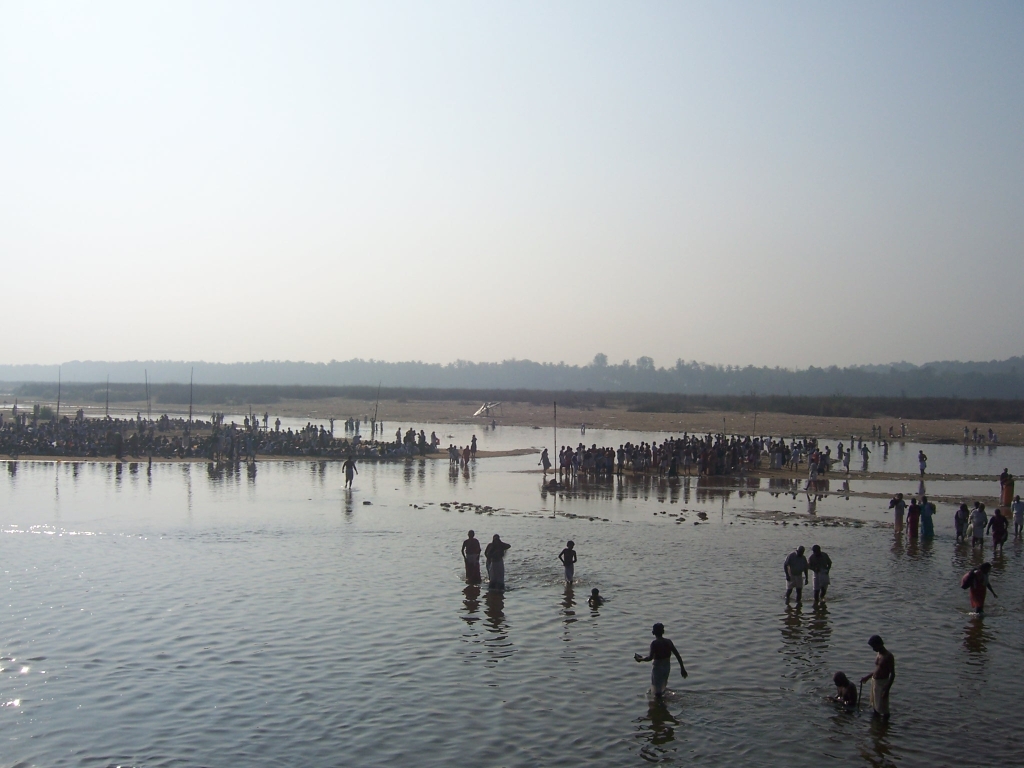
Bali tharpanam at Thirunavaya.

Every Malayali Hindu family observe the Karkkidaka Vavu. This year, 2011 it falls on the 30th of July. Pithru tharpanam is the most noble ritual all Hindus must do. It is the remembrance of one’s ancestors. One should observe the bali to the past 7 generations of his family.

Yearly Pithru bali for each of the deceased family members is observed without fail, by their children, in our family. The rituals have slight changes in different regions, but we follow what our ancestors did.

Karkkidaka vavu falls on the New moon day of Karkkidakam, the first Amavasi of Dakshinayanam. Hindus believe that paying respect to Pithru devatas during this time is a noble ritual.

We observe a semi-fasting on the previous day of Pithru tharpanam. We observe “Orikkal”, which means having “annam” only once a day. For the people of Kerala, their “Annam” is rice. So we take a meal only once that day. We take food only after the bali tharpanam is over the next day.

Throughout Kerala, the river sides will be crowded with people. The rituals start and end with a dip in the river. Pithru tharpanam is done only wearing wet clothes. The dip in the river is to observe ‘shudham’, no one should touch each other after the bath, till the ‘bali’ is over. The rituals are done with the help of a Brahmin.

In the evening “ada” a sweet rice preparation is made on plantain leaves and offered to God. Though I don’t know the significance of it, we still follow the ritual of making ‘ada’ compulsorily. Idli and vada and ada as prasadam is dinner menu after the karkkidaka bali tharpanam.

Eating certain foods, or not eating certain foods on auspicious days is a custom in our family, still followed by many of the elder generation. We hope the younger generation watch and follow the family heritage of religious rituals. Even though some feel they are superstitions, we elders have faith in them and we are sure they too adopt the values of life taught through the rituals if not now, but at some time in their life.

Saturday, June 11, 2011

Kerala village

The beautiful village, Meenadom


Paramada


His pets talking to him..


It's Ammai's farm..

Saturday, April 2, 2011

VISHU


Keralam will celebrate Vishu on 15th of April 2011. Vishu is celebrated on Medam 1st Malayalam month. If Onam is a state festival for Kerala, Vishu is the most important religious festival of Hindus of Kerala.
The day starts at Brahma Muhurtham before sunrise with the Vishukani. The lady of the house will set the Vishukani the previous night when everyone is asleep. Kani is the first sight each one has on Vishu morning. All auspicious things of prosperity are kept before the Nilavilakku and Sree Krishna idol. The whole years’ prosperity is based on what one see at Brahma Muhoorath of that day.
Vishu kaineettam is given to all by the elders on that day. I remember my childhood days connected with Vishukaineettam. In a way we all awaited for this day to have a few coins. The charm of this day is connected with prosperity.
The golden shower tree is the state flower of Kerala. The flowers are of ritual importance in the Vishu festival of Kerala as without Konna poo the Vishukani is incomplete.
The Konna trees in full bloom during the month of April is a an eye catching sight. The flowers hang like golden bells and is believed to be the gold ornament that adorns Sri Krishna, by devotees.
The Hindus of Kerala still celebrate Vishu traditionally. Those who stay away from home too prepare the Vishukani with whatever possible things they get….
Vishukaineettam has not much importance now as children these days get enough pocket money always. In my childhood we got money only on this day. The karanavar of our family used to give 10paisa to children and 25 paisa to adults. It was a ritual that he gave kaineettam to every member of the household.
After the bath and wearing new clothes, we children would go to nearby houses where close relatives like mother’s sister stayed and would get Vishu kaineettam from them too. It was only my father who gave a one rupee coin. Usually mother would take back all the money in the promise of giving back. But we had to wait for it till next year….But those were the days when we had no use of money as we were not allowed to buy anything on our own.
Vishu ends with an elaborate feast and the whole celebration gives us a lot of happiness….
Kani kanum neram kamala nethrante
Niramerum manja thukil charthi
Kanaka kingini valakal mothiram
Aninju kanenam bhagavane
Narakauriyay aravindakshante
Cheriya nalathe kalikalum
Thirumey shobhayum thazhuki pookunnen
Aduthu va unni kani kanman
Malarvathil kanthan vasudevathmajan
Pularkale padi kuzhaloothi
Kelukelu ennu kilungum kanchana
Chilampittodiva kani kanman (kanikanum)
Shishukkalayalla saghimarum thanum
Pashukkale meychu nadakkumbol
Vishakkumbol venna kavarnnunnum krishna
Vashathu va unni kani kanan
Vaarya shreekade thukilum varikonda
Arayalin kombathirunnoro
Sheelakkedukal paranjum bharichum
Neela karvarna kanikanman
Ethire pokumbom arike vannoru
Puthumayayulla vachanangal
Madhuramam vannam paranjum pal
Mandasmithavum thooki va kanikanman
Kani kanum neram kamala nethrante
Niramerum manja thukil charthi
Kanaka kingini valakal mothiram
Aninju kanenam bhagavan

Friday, February 11, 2011

Kadampuzha Bhagavathy Temple

Kadampuzha Bhagavathy temple, is located in a small town Kadampuzha in Thirur of Malappuram District in Kerala. The presiding deity here is Sree Parvathy.

The specialty of the temple is the breaking of coconuts known as “Muttarukkal”. The priest breaks the coconuts brought by the devotees, inside the sri kovil, mentioning the purpose or the obstacle which has to be removed. The way the coconut breaks, the priest predicts the result. If the result is negative, more coconuts are offered until the positive result is seen by the priest. With this it is believed that the obstacle is removed.

People have so much faith that the crowd of devotees increases day by day.

There is no idol in the temple. The Sanctum sanctorum is adorned with a Thidambu of Panchaloha.

The legend is that Arjuna was doing Tapasya to get the “Pashupathastra from Lord Shiva in the same forest where the Lord and Sri Parvathi disguised as hunters, [Kiratha and Kirathi] was searching for Mookasura. Lord was pleased with Arjuna’s tapasya but wanted to test him.

Both Arjuna and the hunter sent arrows at Mookasura and the demon was killed. But both started fighting, claiming the killing of the demon. Lord Shiva let go the fight fierce and Arjuna started sending arrows at the hunter.

Parvathi was angry and cursed Arjuna and the arrows turned into flowers….Arjuna realized his folly and Lord Shiva and Parvathi showed their real form to Arjuna. The Lord blessed him and gave him the Pashupathastra.

The main offering to the Goddess here is “Poomoodal”. The Thechi flowers, [Chethi, as known in some places] which has the shape of arrows are used for Poomoodal.

It was Sree Shankaracharya who felt a divine presence in the forest. With the divyashakthi he obtained through deep meditation, Shankaracharya came to know the presence of Sri Parvathi, and the place was built into a temple.

Goddess here is worshipped in three forms, Vidya Durga (Saraswathi), Vanadurga(Durga/parvathy) and Aadi Durga (Moola Durga Lakshmi). As Durga, She blesses the devotees with good health, wishful marriage and a harmonious family life. Saraswathi is invoked for education and career. Lakshmi is of course Goddess of wealth and prosperity.